Showing posts with label Open Space. Show all posts

Sunday, March 19, 2023

"Give us a theological case for changing something the church believes and practiced for two millennia." Open Space leaders respond to a commenter's question

In March, someone left an anonymous comment on the blog expressing disappointment over some of the other comments. Some, the writer said, seem to be deliberately attempting “to not actually hear what anyone from the other side of discussion is saying.”

The writer went on:

“Yes, there are poor examples of those who are exclusionary and prejudicial. We heard some of those voices at MBCM Assembly.

“But it seems there is no acknowledgement of those who are attempting to welcome, include, and yet continue hold a theological view of marriage as between a man and woman. In my own church, we have a ton of Side-B & Side-A LGBTQ+ folks. I don't think it's charitable for David Wiebe to compare those sorts of folks to genocidal colonizers. It's in poor taste and a straw man of those who love LGBTQ+ people dearly, and of LGBTQ+ people like Wesley Hill or David Bennet who read Scripture as not supporting same-sex marriage but themselves serve as leaders in the church and experience deep belonging.

“It seems the assumption at work in this conversations is that it is IMPOSSIBLE for Christians truly love LGBTQ+ people without changing their theology of marriage. That's a huge assumption at work without any of the leaders of Open Space, Jubilee, or River East giving the conference a theological framework for an alternative reading.

“I find it so curious that it appears that the conference, via Ken Esau. is saying: "Please give us a theology so that we can review the Confession of Faith and arrive at a shared practice"

And Open Space, Jubilee, River East etc, moved by compassion and love, are saying "here's our new practice in conflict with the confession—please don't kick us out."

“No one is talking to each other. No one is speaking in language that the other side would understand. It's a damn tragedy.

“That's way different than the conversations we had on women in ministry. Women in ministry won the day in our conference because they had a compelling theological case. Can't we do the same here? If there is a compelling theological case for LGBTQ+, it will win the day.

“Yes, we need to stop the bleeding. I think everyone can agree on that. Open Space leaders, please help us see why an orthodoxy/theology shift is needed and not an orthopraxis/ posture shift.

“Please, please, please.... give us a theological case for changing something that the church has believed and practiced for two millennia.”

Since the writer named Open Space leaders specificlaly, I asked them to respond. Here is what three of them said.

James Toews

I think we all agree with the responder’s statement that- “No one is talking to each other. No one is speaking in language that the other side would understand. It's a damn tragedy.”

The overriding call from those who planned the Open Space is “we need to talk. Please engage with us on the matter of inclusion/exclusion.” 

In my opinion, there is not a single position on either “side.” In fact, I think the challenge is a wide and frankly multi dimensional paradigm discussion. It’s staggeringly complex.

To get to first base we need to agree to a good faith discussion. This is what our conference leaders have not allowed. We need an Acts 15 dialogue (the one about whether men had to be circumcised to be considered true Jesus followers). We had many different theological positions in our Open Space room. They need testing. Let’s actually test them. 

In my opinion, theology shouldn’t lead the conversation. Hence the call for a theological challenge is misplaced in terms of order. Acts 15 was prompted by community problems that came from the mixing of people from different places in society. That problem exists in our churches. We need to sit down as a community and solve this problem. Theology will follow in healthy communities. 

The question of gay marriage is important. But it follows well down the road. It will follow from the theology of inclusion. Marriage is not a simple biblical institution, contrary to some people’s assumptions. It is not simple from either “side.” Unfortunately it has been used as a litmus test. This is tragic.

Bottom line: we need to talk!

David Wiebe

It's fair for the commenter to make those comments. And they are reasonably gracious. 

I don't like the comparison to the women in ministry and leadership debate, except . . . we did come up with a theology for it when the Board of Reference and Council (BORAC) commissioned the book Your Daughters Shall Prophesy.

When the first drafts came out, there was a lot of complaining from the "classic/traditional" side that it was "biased." Where was the argument for keeping women silent and out of the pulpit? So BORAC dutifully added a couple of chapters to appease the complaints. The classic side always wants to keep their say in it. 

What I am saying is if and when we publish all the pieces related to a theology in favour of inclusion and even affirmation, we'll be strung up for bias. I know our history and character. 

As for "genocidal colonizers," I was referring to the people who said "there is enough light." (The same language as John Underhill of 1600s.) I figured fair is fair: If some, like a delegate at the Manitoba Mennonite Brethren Conference convention thinks homosexual men are still criminals and “need to be accompanied to the bathroom,” and another delegate said the ongoing nature of this issue is like "being raped," then I feel the field has been opened up a bit.

Here's what I'd like to contribute to the commenter's honest question, starting with this key ide: Establish your starting point. 

If you start with "biblical truth" and then move to "dealing with" the problem (whatever it is), you will end up with the 2,000 year-old classic model because you won't get past the proscriptive texts.

If you start with "the church's call to be a blessing for the world" and then move to "dealing with" the problem, you can find the scriptures that balance off the proscriptive texts.

Take, for example, the question of circumcision in the New Testament. Paul had to deal with very clear Old Testament texts proscribing it such as Genesis 17 (It's an everlasting sign.) Which leads to the question: When does "everlasting" end? Apparently, Paul felt he could call it!

In Galatians 5:6, he says that in Christ “neither circumcision nor uncircumcision has any value. The only thing that counts is faith expressing itself through love." I'm very game to do the Bible studies on that!

Other things we could talk about include:

The purpose of the church: how the Bible shows the church is to be a blessing to the world like Israel was to the nations.

Fleshing out "blessing." What do we see in the Old and New Testaments that pushes us to be that blessing? To the rich and powerful and also to the marginalized (widow, orphan, slave, foreigner, those considered unclean.

The purpose of the Bible. Is it a morality code for purity or is it to form and inform a people who will be God's example of kingdom character and bless the world? Is it primarily a source of proof texts or is its purpose to guide us to wisdom? If the latter, where in scripture do we see that wisdom processing occur and how might we learn from that?

Still with the role of the Bible: Does it speak with one voice on this issue? Does it speak with one voice on any issue at all? Why are there nearly 40 duplicate (and even triplicate) stories just in the Torah/Pentateuch? Is the Bible more story than propositional truth? If so, how do we discern truth from story, and what kind of truth are we looking at?

What about delving into the bible as a text by and for the oppressed and marginalized? We miss a lot, as rich, white North Americans if we don’t try to see it from that point of view. (We may not want to do that since will change how we interpret the Bible.)

There are other topics we can explore, such as redemption and its work; what does it mean for the church to offer shalom and kingdom restoration? What is the role of the Holy Spirit? Can we trust the Spirit to do its work of directing queer people in discipleship? What about the “purity" challenge? Why Jesus charted a different path than the pharisees who championed the purity laws, and the implications for us today.

It would also be interesting to talk about neuroscience and morality and (maybe) our ideas of sin; since we know so much more about the body and how it functions in comparison to the last 2,000 years or more, maybe we need to take a new look at our biblical understandings of the human condition and the problems our faith is trying to fix.

Or what about the church's role vis-a-vis culture? Do we recognize how we have already adopted a white, male, rich, colonizing/powerful culture as a church?

There is so much more! But currently there is no space for those kinds of discussions. Many of us are open to trying.

John Unger

Dear Commenter,

Thank you for your post.  It helps me understand how our actions and words are being received and interpreted.

"No one is talking with each other." I couldn't agree more.

Two years ago we sent an Open Letter (signed by over 500 Mennonite Brethren church members), asking our leaders to create space for us to speak and listen to each other—community to community. We wanted to ask questions, seek clarification, and speak the truth in love, remembering that God welcomes all who seek truth with sincerity and integrity.  

In a subsequent meeting with the Executive Board, National Ministry Team, and the National Faith and Life Team, I said conversations around LGBTQ+ inclusion WERE happening all over the place, like popcorn. Wouldn't it be better if we engaged in a national dialog together? Moreover, I said, this was their chance to lead the conversation.

Our national leaders said, no.

(The Open Letter as well as the Response can be found here.) 

Since that time, more churches have been suspended by their provincial conferences, and more pastors are having their credentials reviewed or revoked.   

Thus, the idea of an Open Space event was born. We informed conference leaders of our plans. We met with Elton DaSilva and Ken Esau. They expressed reservations but emphasized they were not trying to stop us from hosting this event. We promised to report the results (which we have done). 

The Open Space offered participants nothing except a safe place to talk. Over 60 people from BC, Alberta, Saskatchewan, Manitoba, and Ontario took time out of their schedules to spend three days in Winnipeg, in January, at their own expense, to talk about our key question: How do we faithfully include and love 2SLGBTQ+ people in our lives and churches as Mennonite Brethren? 

As you will note from the question, this was not designed to be primarily a theological discussion. Yes, questions of theology came up, but the main questions were pastoral and missional. People came with their questions and a wide spectrum of convictions. They spoke and listened respectfully.  

There were many tears as people shared their deep love for the Mennonite Brethren church. But they also told of deep wounds they and their families have experienced in the Mennonite Brethren context. Many said: "If the MB conference could be like this event, I would be in 100%.” 

I still wish those national conversations could have happened. Given recent events of churches being removed from their conferences, I wonder if that window of opportunity has closed. 

You raise the question of resources regarding LGBTQ+ inclusion, particularly from a Side B perspective. One of our congregations has initiated a study based on the book, Two Views on Homosexuality, the Bible, and the Church. It's a good place to start  and is a model for the way in which people who disagree can remain respectful in dialog with one another. 

Another constructive conversation might be had with regard to "texts of rigor" and "texts of welcome," as outlined by Walter Brueggemann.

He goes into more detail in an interview. 

I am particularly intrigued with your church experience, with those on Side A and Side B worshiping together despite deep and often painful differences. A proposal along these lines was presented to the Mennonite Brethren Church of Manitoba Leadership Board, whereby "Side A" congregations (Jubilee and River East, for instance) would be allowed to function as "Borderland" churches within the larger (mostly Side B) conference.  Despite differences, both sides would embrace a commitment to not divide the body of Christ. 

The proposal was rejected. A modified version was presented, but to my knowledge, has not been taken up for consideration. 

All to say that although the Open Space event was not primarily aimed at theological work, theology is definitely important. You may see some online articles of a theological nature in the not-too-distant future.    

I am certain I have not answered all of your questions, but perhaps this is a helpful start.

Tuesday, March 14, 2023

After votes to remove Jubilee, Southridge and FreeChurch from membership, where do Open Space organizers think things should go from here?


Now that Southridge, FreeChurch and Jubilee have been voted out of the Ontario and Manitoba Mennonite Brethren conferences, what’s next for those who want to keep the conversation going about LGBTQ+ welcome, inclusion and affirmation? I posed that question to the four people who organized the Open Space event in Winnipeg in January. Here’s what they said.

For David Wiebe, a new goal is to convince Mennonite Brethren pastors and leaders to read materials produced by marginalized people so they understand how they think and how they are impacted by decisions made about them. 

Another is for them to understand the changing nature of theological revelation. 

In so doing, Wiebe referenced Randy Woodley's book titled Indigenous Theology and the Western Worldview where he quotes John Underhill, a seventeenth century colonist in America who slaughtered as many as 1,500 Indigenous people in raids. 

Underhill justified that killing by referring to wars in the Old Testament, saying “We had sufficient light from the scriptures." 

That phrase, said, Wiebe, has been used by some who oppose welcome and inclusion of LGBTQ+ people—that the Bible provides sufficient light on the matter. 

But just as people in the past claimed they had sufficient light on things like slavery, denying women the opportunity to be clergy or excommunicating divorced people who remarried, the light they see about LGBTQ+ welcome and inclusion may not be as sufficient today as they think, he suggested.   

“Saying there is no new light is a mistake of the highest order,” Wiebe said. 

Wiebe also thinks it’s time to address the Confession of Faith and argue “it is not equal to the Bible. So many people seem to conflate the two. This has to be addressed.” 

He also thinks it is time for pro-inclusion and affirmation individuals and churches to create a network of some kind. 

“It’s too soon to say what that will be, but several of us are connecting about steps going forward,” he said. 

Wiebe also sees signs of hope as more churches explore the topic of LGBTQ+ inclusion and affirmation. This includes a church he knows about where young and young adults in that church see LGBTQ+ welcome and inclusion as not a big deal. 

“Those young adults are leading the way with clarity,” Wiebe said, adding that church is planning some listening sessions this year. 

Finally, he said, it’s time to hear more from Queer people themselves—not just talk about them. 

“It’s time to listen to them, not just talk about the Confession, the Bible, and our politics,” he said.  

For John Unger, the immediate goal is to support churches that have been removed so they know they aren’t alone. 

He also wants to look for positives, wherever he can find them. This includes being assured by CCMBC leadership that no Mennonite Brethren pastor will be de-credentialed and no church have its membership revoked by simply asking questions about the topic. 

“It's only at the point where individuals or congregations make public statements contrary to the Confession that the processes toward exclusion begin,” he said they told him. 

For Unger, “this gives us room to work by connecting individuals, and perhaps congregations, that are looking for more conversation.” 

For James Toews, an urgent need is “to stop the bleeding. Emergency room action is needed before the much needed, longer-term solutions can be undertaken. There are wounded people lying beside the road, apparently unattended. What a travesty!” 

As for a future network, “I hope something mobilizes, and suspect it will,” he said. 

Finally, Dan Unruh had this to say. 

“I read in the Lenten offerings provided by our Mennonite Brethren seminary that ‘Jesus . . . is perfectly righteous and perfectly loving at the same time, not leaning one way or the other as we so often do.’”   

For Unruh, “this necessary juxtaposition of Jesus'  seemingly contradictory leanings are what I have so deeply missed in our Mennonite Brethren journey these past few years vis-a-vis LGBTQ+ and the Mennonite Brethren Conference. 

“I felt that Winnipeg Open Space event was the beginning of the possibility of bringing these two central characteristics of Jesus-following back together at every level in our Mennonite Brethren community. 

“To not do so will be damaging to our faith, our witness, and our mission; to do so would find us walking faithfully in the reality and the mystery of the Jesus way.” 

So, what do you think? Leave a comment with your ideas.

Thursday, January 12, 2023

"It was everything I hoped for:" Open Space organizers share their reflections on the event


At the start of Open Space: A Conversation Worth Having, I asked the organizers to share about their hopes for the event (among other things). In this post, I asked them to share if they thought their hopes were fulfilled. 

The four organizers were David Wiebe, who served with the Canadian Conference of Mennonite Brethren Churches (CCMBC), including as Executive Director; James Toews, who retired in 2021 after several decades as senior pastor at Neighbourhood Church, Nanaimo, B.C. (and was a former MB Herald columnist); Danny Unrau, who served as a pastor for 28 years, including at Fraserview Mennonite Brethren Church in Richmond, B.C.; and John Unger, who served as a pastor in various Mennonite Brethren churches in Manitoba before serving in leadership at Canadian Mennonite University. 

John Unger 

We wanted to create a safe space for conversation. The fact that 60 people from five provinces came, most at their own expense, for these three days demonstrates how much the conversation was needed. It was everything I hoped for. 

David Wiebe 

I was very satisfied for a couple of reasons.  

First, people were encouraged who needed encouragement, even if it was simply to be in the room with other like-minded people. The frequent mention of “being safe," and the personal disclosures by several, were indicators of how sacred this time was for them. And so it was for me.  

Second, we assembled in love for Christ and one another, and thus we have that gift of love to try to present to the conference.  

James Toews 

When one has unclear, ambiguous, conflicted, and possibly even low, expectations the bar to passing them is not very high. That said, I came away thrilled by what happened.  

First, I was hoping that this would be a safe place for people who have not had safety within the MB family for many years. That hope was fully, fully met. That alone would have made the event worth the effort that went into it. 

Second, it was also a demonstration that this particular, complex conversation can be done well. We did not accomplish the clarity of issues that I feel is still required, but it set the table for further clarification of the issues at hand.  

Not only did we get to first base on that quest to clarity, but we have momentum and a trajectory towards second base. I feel that strongly that we have good momentum and direction. 

Third, one of the comments that came out of the final discussion was that this was equivalent to an “experimental farm.” I think that is a beautiful metaphor. We demonstrated that this can be done. And so it begs the question: When and where does the next iteration take place? 

Fourth, the event also demonstrated that the MB family does have a living community memory of a better way of being than has been demonstrated for the past few decades. 

Fifth, the three days were equivalent to what I experienced at the last four ICOMB (International Community of Mennonite Brethren) events I’ve attended—a community that simply enjoys being together.  

From that place, the capacity to solve vexing problems is very robust. Conversely, without love and good will, even small problems tear families apart. I don’t think that matter of inclusion is actually that hard, but without good will, it will indeed tear us apart. It DOES NOT need to. This challenge can and should make us stronger. 

Lastly, the most urgent “to do” that arose from the ranked issues, by far, is the matter of a call for a moratorium on the aggressive actions by provincial conferences against churches and individuals exploring what inclusion means. Time will tell whether we can effectively make that appeal, but it was good to have this so clearly stated. That is a worthy accomplishment. Getting that effectively communicated to conference leaders is indeed the next challenge. 

Dan Unrau 

Did we accomplish what I hoped for? The fact that I'm still sorting what I hoped for, notwithstanding, it was hard, it was soft, it was safe, it was not dangerous (at least not in the room), it was family (at its best), it was community, it was gentle, it was provocative, it was tears, it was laughter, it was surprise, it was disappointment, and it was a strange unknown mixture of what felt like a beginning and an end, it was the Church, and it was walking the winding road with Jesus.  

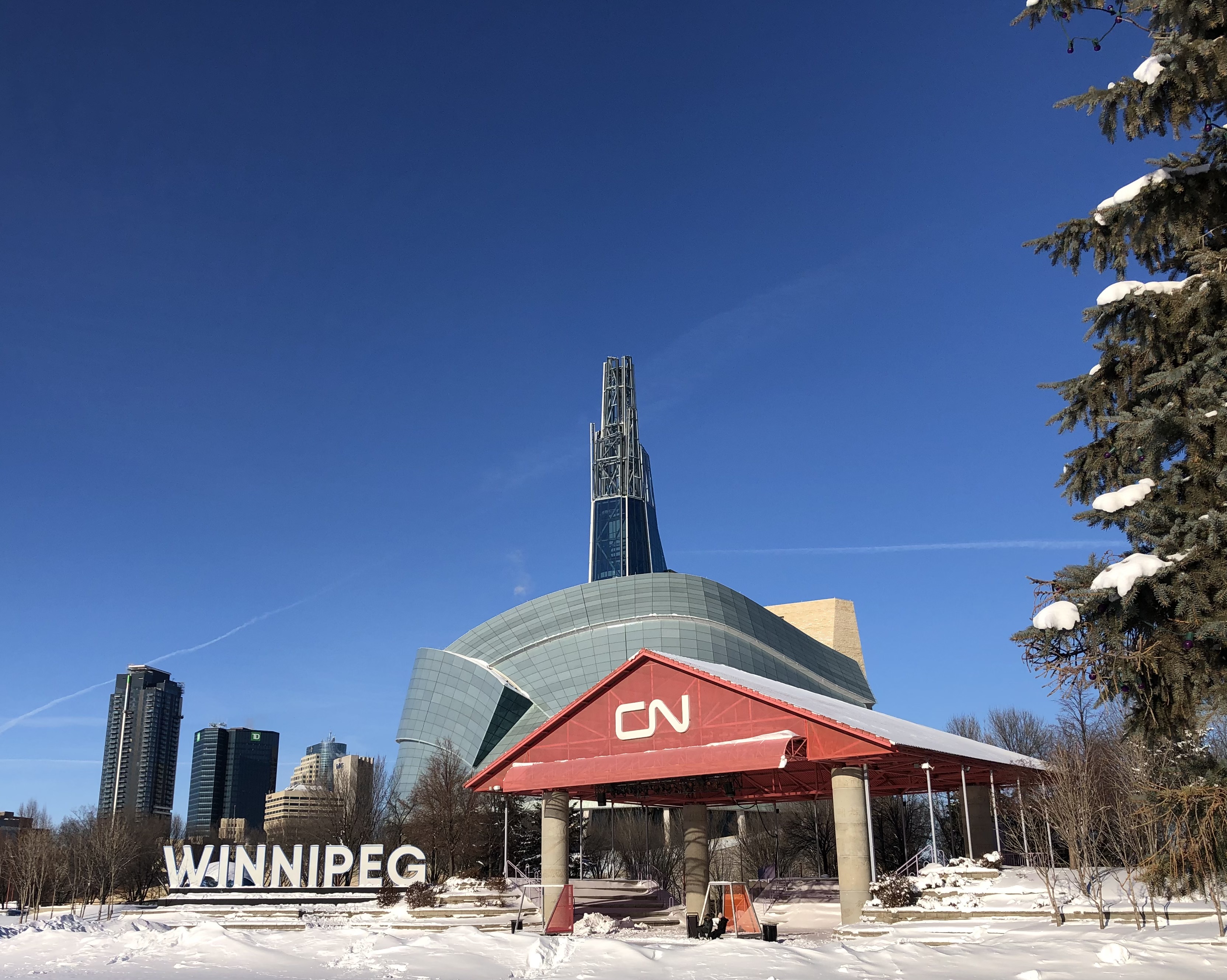
It was raw wounds opened to the 'sky' reaching in hope, all the way to the top of the Museum for Human Rights. Did it accomplish what I hoped for? Still don't know for sure, but it certainly was something very much akin.

Wednesday, January 11, 2023

“It reignited my sense of hope for church and what it can be." Final voices from Open Space


At the concluding session of Open Space on Jan. 11, participants were invited to share what the even meant to them. Below are some of the comments. All are anonymous, in keeping with the nature of the gathering. 

“I came pessimistic and cynical, and didn’t have much hope the system could change. But now I feel and more hopeful for being with people I respect and admire. There is hope for the future.” 

“I was grateful to be part of this. There are no opportunities for me to discuss this topic in other places.” 

“I was so impressed by the range and scope of the sharing. It was a real gift.” 

“Open Space was a study in consensual leadership. It’s an example of the kind of consensual leadership need desperately in the conference. I hope it can be replicated.” 

“What transpired here matters. It’s like dropping a pebble in a pond, the ripples can’t be stopped. Each voice and experience matters. Let’s not give up hope. It’s probably not about saving the institutional family, but about being the church God calls us to be.” 

“I feel so alone in my province. It was good to be with you and connect with you. Thanks to organizers, who had the vision had to organize the event.” 

“It reignited my sense of hope for church and what it can be. I was very encouraged, as a younger person. I was encouraged by the elders here, and am grateful for them, for driving this conversation forward.” 

“A question I ask myself often is what do I do with love for the Mennonite Brethren church? I can’t shake it. It would be easy to put that love someplace else, go somewhere else. But now and then I find out why love the Mennonite Brethren church, and an event like this is why.” 

“The message from here is good news for everyone. I want that to be understood by conference, and I want people to know it outside the church, too.” 

“I have to say I was inspired by young people in this room, the talents I see, their drive and creativity. It was time well spent. A good investment.” 

“I look forward to the time when more LGBTQ+ voices can be part of this conversation.” 

“I was not hopeful when I came. I was an edge person, ready to jump. I have great love for the Mennonite Brethren church, but it’s been pretty discouraging this year. But this group of people feels like my tribe. It was very different from meetings on this topic I’ve been to in the past.” 

“I do have hope. I don’t know what will happen to my church, but I know change is coming. I will do everything in my power, in a kind and loving way, to expedite that change.” 

“Given the recent history of the Mennonite Brethren conference, this meeting was absolutely necessary. It’s not been safe to share what is on your heart if it is not part of the party line.” 

“I wish this event hadn’t been necessary. I was saddened when Conference leaders said no to leading us in this conversation. When preaching, I would always pray that if this is chaff, let the wind blow it away. But if it is good seed, let it fall into good soil. I don’t know what will come of this. I pray it will be seeds that find root.” 

“We need to stop saying that the church has hurt LGBTQ+ people. It is hurting them now. My kids are the teenagers. They won’t join in the church, it’s not safe. I have to walk with them away from church. Is there space in the Mennonite Brethren church for my daughter? She is a person, she is not a topic. She is not a theology. She is a child.” 

“I’ve been deeply hurt by the words and actions of our conference leaders. You gave me a safe space to share my story; I didn’t even realize I needed to do that. It gave me a space to find healing.” 

“I’m a proud parent of a transgender child. I can share that in this space. It feels like a space that I desire to walk in.” 

“I came not feeling too hopeful, but now I feel hopeful after hearing so many stories.” 

“It is good to know there is a greater group of people, more than just people like us who are parents of LGBTQ+ people. It’s good to know other people share our experience, they are also on a journey with us.” 

“I really wanted to be here, to hear stories and voices that are dear to my heart. One word that came to me about this time together is courage; I witnessed and heard stories of courage and that courage really humbled me. I want to have more courage.” 

“I am proud fully affirming mother of Lesbian daughter. I’ve only said that out loud one other time.” 

“I came as an outsider. I feel God’s love and presence here. It gives me hope for my grandchildren, that one day they can express themselves fully in the church.” 

“I came with few expectations. I’m surprised how personally I was impacted. I am a mother of two queer children. My church doesn’t know my story. But being here has given me courage to tell it.” 

“I made a commitment to myself to put a note on my fridge to hold you all in prayer every day for a minute, and those beyond the circle who are struggling. As for the future, I was pessimistic before I came, but now I sense a great mystery of something bubbling and gurgling, something bigger than I thought. Now I amexcited to see how that will unfold.” 

“I believe God speaks when God’s people speak and listen to one another. The spirit of God was  present in this group the last three days. I don’t know what next steps are. I want to commit to following Lordship of Christ whatever the cost is.” 

“I never experienced anything like this at an Mennonite Brethren gathering before.” 

“I hope as a result of this we have strength to take stories back to our communities, to get louder as allies and friends, and for all in marginalized communities.” 

“In Romans 5, Paul is trying to encourage church in Rome who are suffering. There is hope, he says, adding that suffering produces endurance, endurance produces character, and that produces hope. I’ve seen it my own life, and in the lives of others. And hope doesn’t disappoint. There is a pathway forward.”

More topics and notes from Open Space breakout groups


During the Jan. 9-11 Open Space event, participants were invited to suggest topics for discussion.These topics form the basis of the conversation during the time together. Below find a few more of the topics and notes from the discussions.

What is the gift of 2SLGBTQ + people in the church at this time?

A chance to reframe the conversation away from thinking about something as an “issue” and more about people.

  • A focus on lived experience and appreciate the reality of relationship and experience.
  • They are a unique voice to speak to the church; we have something to say and offer to the church as people who have been on the margins.
  • The gift of being a parent of a gay child .
  • The gift of courage; it takes so much courage to be in certain places and to bring their full selves to the table. When that courage exists in the church, it spills over into other things. When people don’t have the courage to be authentic and who they are with integrity, we lose.
  • The gift of awareness.
  • The gift of community to community.
  • Gift of gay marriage as saving the ritual of marriage for heterosexual marriage as well.
  • The gift of other parents of queer children who are also in leadership has been significant.
  • The gift of opening up hard conversations.
  • The courage to walk in the mystery… “I don’t know what I think about this theologically but I know this person needs a pastor.” Let there be space for there to be pastoral care first and foremost – we can work out the theological challenges later.

What are unique ways that parents can promote the affirming journey?

  • We have an opportunity to speak from a personal perspective.
  • We have stories to share from our kids and their friends. We bring reality to this question.
  • We can be safe places for other kids (e.g. our kids friends, students)
  • We can help other parents who have kids who come out. We can share resources and stories. 
  • We can be safe for other parents to share their fears and joys. We can help others realize they are not alone.
  • We can lead study groups and support groups for parents and other interested people.
  • If we have history in a congregation, we are respected so are not suspect theologically.
  • We are better able to accept the shock of different orientation and gender identities.
  • We know there is not a quick fix.
  • We have perseverance and are invested. We will stay at the table and live with the discomfort.
  • We have natural contacts in our work, churches, and schools.
  • We can represent our children if there is a human rights or-bullying challenge.
  • We have been chosen by God to be his hands of love.

Is the Mennonite Brethren response to LGBTQ+ driven more by fear than theology?

  • Yes, fear is a major factor in the environment of this discussion.
  • Fear resulting from the paradigm shift that accommodating an emerging inclusion theology. 
  • Fear of changing one’s mind
  • Fear of even this Open Space event taking place; a source of anxiety for conference leadership.
  • Fear of over what will happen to the denomination (e.g. churches leaving)

What exacerbates fear? 

  • Secrecy
  • Lack of information
  • Isolation
  • Theological beliefs
  • Fear-based leadership structures

What mitigates fear?

  • Healthy relationships
  • Knowledge I.e. the science of sexuality and diversity
  • Healthy communication
  • Healthy long term relationships 
  • Healthy theology

It was noted there is fear is on both sides. For those in favour of LGBTQ+ inclusion and welcome, there is fear of loss of employment or inclusion in the church community

How to include LGBTQ+ voices

  • Listen to their stories first before including them, hold space e.g. A Time to Listen
  • They might be impatient with our agonizing
  • Watch our language; this is not an “issue.” It’s about people.
  • Invite them into safe spaces (e.g. A Time to Listen)
  • Build relationships
  • Go to their spaces, not always expect them to come into ours (e.g. flag-raising, Pride parades)
  • Send signals (e.gh. gender neutral washrooms, rainbow signs)
  • Don’t expect them to always tell their stories; it can be hard for them to be discussed repeatedly, the fatigue of educating others
  • Ask what they want to talk about

Where will future Mennonite Brethren leaders come from?

  • Many in the younger generation have given up on the Mennonite Brethren world because of where the conversation is at around inclusion.
  • Do we care that we are losing the next generation? What are their voices saying?
  • There seems to be two demographics that are happy to move forward: our older leaders (why are we not gathering together the older generation and learning from their collective wisdom?), and our next generation (under 35 leaders)
  • Our hope is that our youth remain within the Christian faith, not necessarily within the conference.
  • Said a younger person: We are not necessarily looking for an affirming space, but for a space that can actually dialogue. We’re more afraid of a family that can’t talk or won’t dialogue then anything.
  • There’s a passion to do stuff, but there isn’t a sense that the church is the vehicle to do that stuff anymore.
  • Feeling invested in. (Notice that for many of us it wasn’t the ministry involvement we had, but the opportunities we were given to have a seat at the table, regardless of whether or not we had earned it, and then to have our voices validated).

Defining the terms of the discussion

How to manage the polarities of the Traditional versus Open positions? We need to find ways to bridge the gap.

  • Important to understand what we are disagreeing on
  • Starting points are important. Don’t start with “Where do you stand on gay marriage?” A better place to start is “how can we relate to/include gay people?”
  • People hear the word “inclusion” differently. Inclusion for the conference means treating gay Christians like anyone else. For us, it means having no caveats when they come into the door. We don’t say “here’s where you can’t go.” 
  • Can we have a good faith conversation with conference leaders? With traditional pastors and church boards? It requires trust on both sides; maybe lots of one-on-one conversations to build trust. 
  • Instead of us making a case to include, we should ask the conference to make the case for excluding. 
  • Use “defusing” language 
  • Help people acknowledge the “win-lose” dynamic at work and “drop it” for the next 15-30 minutes so that possible fruitful dialogue can take place.
  • Watch that this Open Space group doesn’t take on a “us versus them” mentality. Keep a gentle perspective and speak respectfully.

Measuring Success 

Metrics for assessing progress toward inclusion include:

  •  
  • Harm challenged, an apology
  • Evidence of welcome and openness: signage, clarity on website
  • Knowledge of community makeup – awareness of LGBTQ presence
  • Inclusive language of worship – sensitivity to patriarchal and colonizing language e.g. Mennonite Church hymnbook
  • Gender neutral bathrooms
  • Interest in justice – broader than just LGBTQ, acknowledging current injustices
  • Covenant about how to talk about inclusion and LGBTQ people before engaging in the conversation
  • Education/sensitivity training
  • Perpetual stance of being a learner – freedom to ask questions
  • Public support of elimination of conversion therapy or counseling
  • Information about the church’s philosophy of counseling
  • Knowledge of community resources and services
  • Avoid offensive humour and embrace mutually positive humour
  • Asking honouring questions
  • Treat with respect while honouring differences
  • Pursue community around a common purpose
  • Give space by not asking intrusive questions of LGBTQ people which we wouldn’t ask of straight people

Affiliation with the Mennonite Brethren Conference

  • Churches across the country are wondering if they should leave the Mennonite Brethren Conference. Some are considering Mennonite Church Canada, which permits churches to be inclusive and affirming of LGBTQ+ people.
  • The question wa asked if there is a way for churches to stay in communication with each other during this time, perhaps take action together.
  • It was suggested that churches should be very careful about ‘giving up on the MB conference.’ We have a voice and a need to exercise it. 

Time for a moratorium on suspending churches that explore LGBTQ+ inclusion?

  • The idea of a moratorium would be to delay the process, give time for more conversation.
  • The Borderland Proposal from River East Church was mentioned. It was submitted to the conference about half a year ago.  No official response yet.
  • Can we think about sending a delegation to the CCMBC rather than simply sending in a report?  The idea would be for conversation. 
  • To get change, there is the carrot and the stick. What is the stick? What is the carrot?
  • Idea:  to have Open Space conversations in provinces across this country.
  • Language has changed in B.C. from community hermeneutic to apostolic leadership.  Language changes first and then actions.
  • It was suggested a proposal on a moratorium has no chance in some parts of the country. 
  • Hope is that all churches that are removed from the conferences stay in touch with each other until they are allowed back. But more, that these churches ‘stay’ in the conference even if they are removed from it. That is, people could remain connected with the shared beliefs (almost all of them), shared relationships and shared ministries. 

Action items

  • Very interested in green light, red light items on what it means to be MB and what it does not mean
  • Share among us on how a church exploring the topic of Open Spaces can remain effectively within the conference
  • Churches that are affirming are growing; narrative could be helpful; one tool that could be pulled out
  • Where are all the smart, young people?  Where are the next pastors going to come from? 
  • Ontario Feb, Manitoba March, the conventions are an opportunity to speak to the borderland proposals
  • A delegation from this event to the CCMBC leadership
  • With whatever happens, how do we retain connections with each other and, at the same time, we refuse to leave. 
  • Trust is broken on both sides. Can’t let go of hope to remain in the family. At the same time, perhaps we hold on to the idea of family too strongly. 
  • Similarly, there is a script and video and Conrad’s report for those who are really interested in perceptions of MWC membership.

How do we equip parents for age-appropriate healthy conversations with their children?

  • Teachings through Safe place policy
  • Supporting kids when there is bullying
  • Sending messages that kids are allowed to be who they are, especially those who may feel different
  • Posture Shift resources may be helpful
  • Parents may be in different places with their belief systems/values
  • Have sex positive talks to have with kids.

How do we network between the various Anabaptist networks?

  • There is a growing number of churches that are being asked to leave the Mennonite Brethren family. It can often be a lonely journey. Is there a way for these churches to network?
  • We used to focus on shared mission, shared relationships, and shared convictions.
  • Today it feels as though the shared conviction piece is that seems to be of concern for our conference leadership.
  • In some family network they are both a family and a business operation. They find ways to separate those to and co-exist. It is possible for a church to no longer be part of ‘the business’, but continue to be part of this family...
  • Could we behave like a denomination as we do as churches? In churches we no longer excommunicate people. There is a lot of forbearance in the local family and the local church. Why is there only an in or out option within the denomination?
  • Can we separate belonging from total confessional alignment?
  • What are the needs for leaders in these moments of transition? Is it different than those of the people who make up these churches? Should more emphasis go to supporting the leaders?
  • Is the future going to be more regional partnering rather than national or even international identity?
  • Should we start a new network of anabaptist churches? There seems to be little appetite for that. Rather there is a lot of hope to stay at the table – what might things be like in the MB family in 5-10 years?
  • Minimally is there a way to share our journeys?

How to Engage People in Pews

  • Shoulder tap young leaders who are here: invite them to create a meeting of MB young adult church members to orient them to the issue and inspire and equip them to volunteer to be delegates for their congregations.
  • Identify respected influencers in congregations and call them to prepare to speak to a motion to table the conversation (congregation’s haven’t had enough time to process the subject).
  • Engage conference leadership regarding how much opportunity there will be for the churches under the microscope to share their story at convention. (Conference leadership tends to react to challenges without having prepared for potentialities. If we help prepare them in advance for the questions we want to pose/the issues we want to raise, it will be for the good of all.)
  • Prepare a brief summary to distribute via that concisely makes a case for how one can offer inclusion to 2SLGBTQ+ while still being true to Scripture. (Perhaps everyone at this event could dig up the open letter list and contact the signees they know who weren’t here and provide them with an update and point to new resources.)
  • We need to keep sharing stories

Update on this blog: Time for a pause