Tuesday, October 25, 2022

Letter from Mennonite Brethren Church of Manitoba regarding the suspension of Jubilee Mennonite Church


In a letter to Manitoba Mennonite Brethren Churches, the Board of Mennonite Brethren Church Manitoba (MBCM) shared about its decision to suspend Jubilee Mennonite Church from membership for its decision to welcome, affirm and be willing to marry same-sex people. 

“With a humble and careful posture, the MBCM board moved Jubilee Mennonite Church’s membership in MBCM to a status of suspended, as of October 3, 2022,” the letter from Moderator Dave Ens said. 

“As per the process outlined in MBCM’s constitution, the MBCM Provincial Faith and Life Team will conduct a review of the circumstances that have led to this suspension. They will report their findings back to the MBCM board. The board will then either resolve to reinstate Jubilee Mennonite Church upon the board’s satisfaction that the concerns have been adequately rectified or provide recommendation to the Assembly of MBCM churches in March 2023 for removal of membership.” 

Enns went on to say the MBCM board has offered to meet with Jubilee’s leadership for further dialogue and to resolve the “concerns” related to the church’s decision. 

A major concern, as outlined in a previous letter to Jubilee, is how the church’s statement of inclusion “fails to adhere to CCMBC confession of faith” which states that “Marriage is a covenant relationship intended to unite a man and a woman for life. Jubilee’s statement avoids our confessional definition of marriage as exclusive to a man and woman for life.” 

To date, Jubilee has not indicated it is willing to change its statement.

Jubilee is also a member of Mennonite Church Manitoba, which welcomed its decision. 

The full letter from the Conference is below. 

October 21, 2022 

To the Manitoba MB Family of Churches. 

Grace & peace to you. 

This letter is a follow-up to the September 9, 2022 communication you received from us regarding Jubilee Mennonite Church. 

The MBCM Board recognizes that LGBTQ+ persons, along with their friends and families, have experienced exclusion and rejection in churches. While this is not everyone’s story, we understand that it is the story of many. We are committed to a future where better stories are experienced. Each MBCM church is invited to join in this journey, where LGBTQ+ persons and their families experience inclusion and care. 

As well, we recognize that some of the implications of working to include and care for LGBTQ+ persons can bump up against our shared confession. The MBCM board continues to affirm our shared confession, in all of its aspects. 

On August 5, 2022, you received a communication informing you that Jubilee Mennonite Church had published a statement of inclusion related to LGBTQ+ people. While there are many aspects of the statement with which we agree, the statement disagrees with our confession of faith on the matter of marriage. At that time, we proposed a town hall meeting on September 14 to provide more information and give space for questions. 

On September 9, a second communication was issued that cancelled the Sept 14 town hall, indicating that this will be part of the agenda at the Council of Representatives (CR) on November 19. The board felt it prudent to cancel Sept 14 given that we had entered into the constitutionally outlined process in regards to reviewing a church’s membership in MBCM. The process creates space for us to ensure that both the church and the MBCM board have clarity on the issue. We recognize that we are working through this as brothers & sisters and want to do so with humility and integrity. 

As is outlined in the process, there has been on-going communication with Jubilee. While these conversations have been good in many ways, we find that Jubilee continues to hold to their statement that disagrees with our shared confession. 

With a humble and careful posture, the MBCM board moved Jubilee Mennonite Church’s membership in MBCM to a status of suspended, as of October 3, 2022. As per the process outlined in MBCM’s constitution, the MBCM Provincial Faith and Life Team will conduct a review of the circumstances that have led to this suspension. They will report their findings back to the MBCM board. The board will then either resolve to reinstate Jubilee Mennonite Church upon the board’s satisfaction that the concerns have been adequately rectified or provide recommendation to the Assembly of MBCM churches in March 2023 for removal of membership. 

As we continue in this process, the board has offered an invitation to meet with Jubilee’s leadership for further dialogue. As mentioned, there will be time for discussion on this matter at the CR on November 19, 2022. We invite you to be in prayer for all involved as we journey through this process. May God work in and through us as we seek to be faithful in following him. 

On behalf of the MBCM board 

Dave Ens, MBCM Board Moderator, Mennonite Brethren Church of Manitoba

Monday, October 24, 2022

Jubilee Mennonite Church membership suspended by Mennonite Brethren Church of Manitoba over LGBTQ+


Earlier, I wrote about the decision by Jubilee Mennonite Church in Winnipeg to become welcoming and affirming of LGBTQ+ people. 

Jubilee is a dual-conference church, belonging to both Mennonite Church Manitoba and the Mennonite Brethren Church of Manitoba.

I also wrote about the initial response of MBCM to Jubilee's decision.

In September MBCM suspended Jubilee's membership. Read about it in Anabaptist World.

Friday, October 21, 2022

Opinion: Of the German language and welcoming LGBTQ+ people


“How dare you tell us what language we can speak!” 

That’s what a dear old saint said to me, her wrinkled finger waving menacingly in front of my face. 

It was the late 1970s. I was a relatively new member of the Mennonite Brethren conference, one of a few who came to the denomination from outside of traditional family ties—one of the “English.” 

A student at Mennonite Brethren Bible College, I was invited to go to the national conference assembly in Three Hills, Alberta to both observe and participate. 

The first evening of the gathering, people who spoke from the podium, and went to the floor mics, sometimes spoke German. 

That’s when I, in my early 20s, went to a mic full of trepidation and asked if people would kindly refrain from speaking German since some of us didn’t understand it—or to translate, if they did. 

Which prompted the reaction after the evening session, the tiny woman seeking me out and letting me know, in no uncertain terms, how unwelcome my comments had been for her. 

I can still picture the incident in my mind, 45 or so years ago. 

Today it is rare to hear German spoken in an MB church, and many people with “non-Mennonite” names have called the denomination their home. 

But back then, people like me—“Mennonites by choice,” as we were called—could struggle at times to feel welcome and fit in. 

For starters, it felt like everyone in the church was related. Then there was the insider knowledge about how things worked. 

And the music! Sure, four-part harmony sounded beautiful, but  if you couldn't sing you were immediately an outsider. The first time I stood up to sing in my new MB church I heard all these parts I didn't recognize around me and I stopped. I didn't try singing for months. 

(Churches that prize four-part singing have no idea how quickly it excludes many who grew up outside of those churches, and don't know how to sing. Those notes are a foreign language that only the insiders can read. Today, in most MB churches, anyway, it would be just as rare to hear four-part harmony as German. For them, both languages are now relics of the past.)

To be clear, nobody consciously tried to make me feel unwelcome. (Except that dear old saint.) They were glad I was there. I was glad to be there.

But newcomers like me could still sometimes feel like we weren't really part of the family, unless we made all the effort to fit in.

I mention this because the same may be true today for churches that decide to become welcoming and affirming of LGBTQ+ people. 

As I wrote in the Winnipeg Free Press on Oct. 21, the decision to welcome LGBTQ+ today, like the decision to welcome non-traditional Mennonites back then, is just the first step.

As David Driedger, lead minister of First Mennonite Church in Winnipeg put it when that church decided in 2017 to be welcoming and affirming: "There was a temptation to think we’d arrived” and no more needed to be done. 

But that was just the start of the conversation, he went on to say.

“If you think of a church like a house, and you invite people into your house, the next question is to reassess the house rules and accessibility,” he said. “What are the implicit and explicit things that make people truly feel welcome or not?”

That’s a good question. Answers include taking a close look at the language used in services, how the Bible is read and interpreted, and what hymns and songs are sung—among other things.

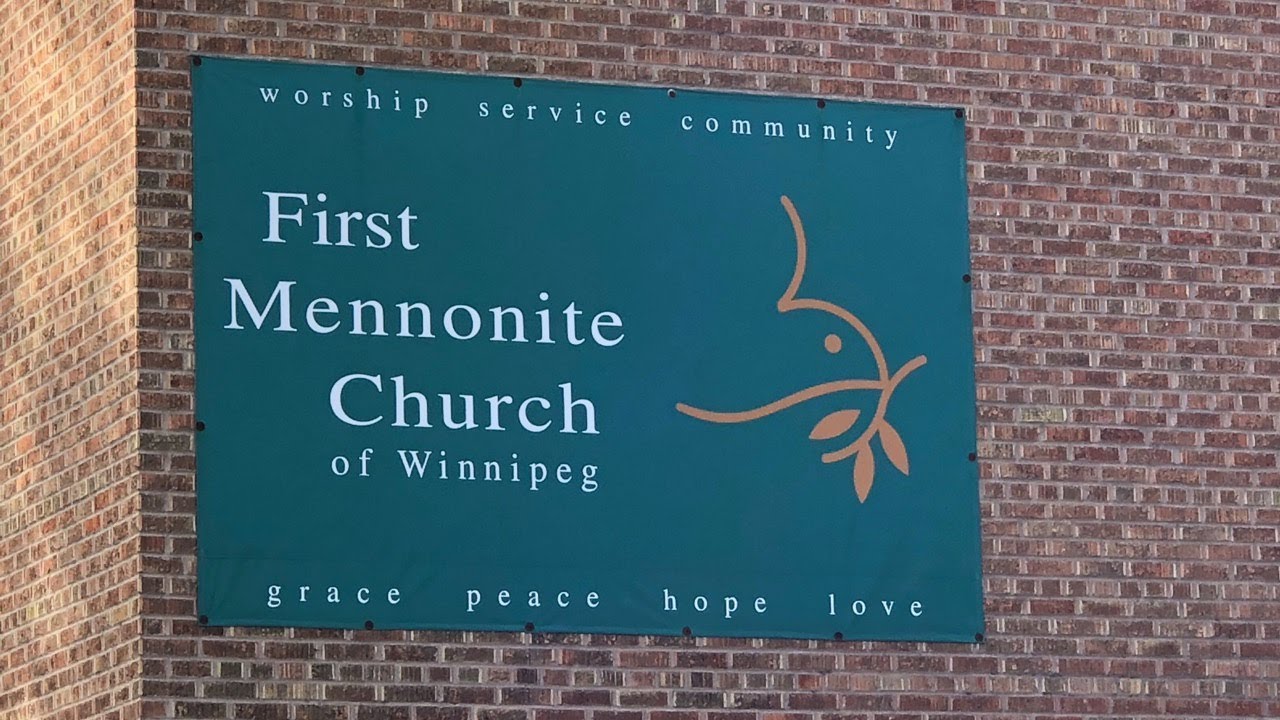
People interested in that topic can find out more at “Queer Theology and the Church: After the Affirmation,” a series of four Sunday evening in-person and livestreamed conversations sponsored by First Mennonite about ways churches can make sure LGBTQ+ people feel fully included.

The free series, which starts October 23 at 7 p.m., will cover topics such as “Queer theology and inclusion;” “A trauma-informed and justice-making approach to Christian theology;” “Worshipping the (W)holy other: queer theology in our hymns and confessions;” and “Undressed and undone: how sex and holiness change everything.”

As someone who sometimes struggled to feel welcome in the MB denomination years ago, I get it. Now it is being repeated as some churches seek to welcome a new kind of newcomer: LGBTQ+ people.


More information can be found at https://firstmennonitechurch.ca/special-events/

Friday, September 16, 2022

Opinion: In praise of the Ontario Mennonite Brethren Conference for talking about LGBTQ+


Earlier, I praised the Canadian Conference of Mennonite Brethren Churches for publishing critical comments on its story in the MB Herald Digest about the censoring of On Holy Ground.

Good on them, I said for allowing people to post criticism about the decision—not censoring comments about censorship. 

Time now to praise the Ontario Mennonite Brethren Conference for hosting a meeting of pastors and others on Sept. 13 to talk about LGBTQ+. 

It was not, the Conference said, to be a meeting where theology would be debated. Instead, it would be “an intentional time to hear from each other. The stories of how God is leading you and your church at this time is what we want to mine into.” 

It was to be a safe space to talk and ask questions, in other words. And that should be commended.  

Did the meeting fulfill that promise? I don’t know. Conference leadership isn’t able to talk to me about it yet. But I hope that happened. And I hope they will tell me at some point. 

The fact of the matter is this: The topic is being talked about in Mennonite Brethren churches across the country, whether leadership in provincial conferences or the national conference condone it or not. 

Church basements, Zoom meetings, home fellowships, friendship groups—it’s on people’s minds. 

Some want to explore it out of interest. But others do so because they have a gay child, sibling, relative or friend who loves Jesus as much as they do. 

They need safe places to talk about it—the very thing some leaders are unwilling or afraid to do. 

The only question is: Do conference leaders want to be part of the conversation, or not? Because it is happening, with or without their participation. 

So again, good on the Ontario MB Conference. Maybe the next meeting, or set of meetings, they hold will be for all members, not just leaders.


Ontario Mennonite Brethren Conference holds meeting to discuss LGBTQ+


Mennonite Brethren church leaders in Ontario met September 13 for a day of discussion about LGBTQ+.

In arranging the meeting, conference leadership said it was not to be a day “where we will be debating theology—although our conversation will certainly be theological in nature.”

It was also not to be about changing the MB “confessional perspective on human sexuality.”

Instead, it was to be “an intentional time to hear from each other. The stories of how God is leading you and your church at this time is what we want to mine into.”

According to the Ontario MB conference, “it is becoming apparent that in our varying contexts we are navigating the inclusion of the LGBTQ+ community in different ways. This is causing tension and in some cases a loss of trust among us. So, we need to hear from each other, pray together and seek God's design for our family of churches.”

In some ways, the conference said, “the stakes could not be higher.”

At the same time, it said there are “similarities to the Jerusalem Council gathering in Acts 15. We are at an inflection point as a family of churches and the choices we make at this time will significantly impact our unity and our missional effectiveness in the days to come.”

When asked about the event, Executive Director Ed Willms said he was not able to share more details at this time.

Wednesday, September 7, 2022

Update on Cedar Park Church


Earlier, I reported about what happened at Cedar Park Church when the B.C. Mennonite Brethren Conference shut down it’s effort to discuss LGBTQ+ welcome and inclusion—in the process causing all three pastors to resign and most members to leave.

I’m told about 30-35 people, including children, stayed at the church. About 100 former members and attendees who left have been meeting for monthly fellowship services this past summer.

Some other former CPC members have gone to other churches, while others have “just given up meeting due their hurt and anger caused by the way the provincial MB leadership treated our board and pastors,” as one former member put it.

Those who have stayed in touch “are holding on to hope that something beautiful and different could emerge in the future,” he added.

Thursday, September 1, 2022

Behind the scenes as Jubilee Mennonite Church in Winnipeg votes to become affirming


Earlier I wrote about the response of the Manitoba Mennonite Brethren Conference to the decision by Jubilee Mennonite Church in Winnipeg, a dual-conference congregation (MC Manitoba and MB Manitoba) to become affirming of LGBTQ+ people--including marrying same-sex couples.

The latest issue of Canadian Mennonite has my story about how the church came to that decision, which it made in June.

Read about it in Canadian Mennonite. 

Monday, August 29, 2022

Opinion: Is it time for more conversation in the MB conference about LGBTQ+?


I recently reconnected with a relative who is about my age (mid-60s). 

A former member of the Mennonite Brethren conference, she wanted to catch up on life and talk about how her faith had changed—and about LGBTQ+. 

I wasn’t sure what direction the conversation would take. 

As it turned out, she has moved away from the more rigid, exclusionary and judgmental faith taught to her during her youth to a more generous and open view of God and God’s love for all humanity. 

“Who am I to judge who Jesus should love and accept?” she said. 

For her, that included LGBTQ+ people. 

Like many who grew up in the church in the 1960s and 70s, she was taught that anyone who was homosexual was sinning and going to Hell. 

But she no longer believes that.

For her, one turning point was a Lesbian couple who came to her church. 

They were good people who came seeking support and prayer—which she and others were happy to provide, along with friendship.

Talking to her, I realized again that this isn't just a topic of interest to younger people. Many older members of the MB conference want to talk about LGBTQ+, too.

In their older years, they have adopted a more generous stance when it comes to who is in and who is out in the family of faith. 

Or they are simply more open to exploring new ideas than people often give them credit for.

After my conversation with my relative, I had to wonder if MB conference leadership is simply out of step when it comes to being willing to talk about LGBTQ+. 

Maybe they shouldn't be afraid of offending older members; maybe many of those older members are already way ahead of them when it comes to talking about this subject.

That's what an MB  pastor friend found out when he spoke at a women's group at this church a few years ago.

When told the group of about 25 older women they could ask him anything, one woman asked about LGBTQ+.

Her granddaughter had just come out, but she didn't know where she could go to talk about it.

Four other women quickly added that was their experience, too, involving grandchildren, children or siblings. 

It caused my pastor friend to realize their was a desire to talk about LGBTQ+, but no place in the church where people felt safe doing it. 

This anecdotal evidence was corroborated by a 2021 survey of Canadian MB churches by the Mennonite Brethren Seminary.

When it asked churches if they are interested in talking about LGBTQ+, 88% said yes. 

Despite this, the Canadian Conference of MB Churches, and some provincial conferences, are reluctant to open up the conversation. It’s a no-go zone for them. 

The national conference turned down an opportunity a few years ago. That led to the creation of a Time to Listen, a member-led effort to give MB church members chances to hear stories from and about the LGBTQ+ community. 

The one time the subject appeared in an official Mennonite Brethren publication--the book On Holy Ground--three pages about LGBTQ+ were censored and the original print run destroyed. . 

(By-the-way, to date those three missing pages have been viewed over 4,600 times on this blog.) 

But many people want to talk about it. Will the MB conference in Canada, and provincial conferences, create space to do so? And in a way that invites real dialogue and room for disagreement and different perspectives? 

I hope so. But I'm not holding my breath. Maybe someone will have to take the initiative if leaders won't.

Anyone up for a challenge?

Maybe the result will be more placid than anyone realizes, like the photo above. 


Sunday, August 21, 2022

"I felt I have not been heard:" Lee Kosa, former pastor at Cedar Park Church, on why he wrote a raw and honest blog post about his conflict with the British Columbia MB Conference


Earlier this month, Lee Kosa, former pastor at Cedar Park Church in B.C., wrote a frank, raw and honest blog post about the events that led to him resigning his position at that church.

Titled "On Conflict, Pain & Composting: Reflections on the Worst Church Year of my Life," it reveals the personal and professional cost of how he was treated by the British Columbia Mennonite Brethren Conference when the church he led decided it would like to explore the topic of LGBT+ acceptance and welcome. 

It delves into the mental and emotional cost of that conflict, including thoughts of suicide.

In the post he writes about how it felt to be called a “false teacher,” to be the subject of a secret investigation by BCMB into his ministry, and having his credentials for ministry taken away by the conference, among other things. 

After reading the post, I sent him aa few questions. I wondered: Why did he write it? What did he hope people would take away from it? And what message does he have for conference leaders? Find that conversation below. 

Why did you write the post?

As I’ve shared my story of church pain over the past year, I’ve noticed a few things. It’s exhausting for me to verbalize these events and it often activates my nervous system. People recognize the traumatic nature of the experience, and sometimes confess that they too have had traumatic church experiences.

I shared my story so I don’t have to retell it over and over and so that those who have been through spiritual trauma might know that they are not alone. 

As I’ve worked with a trauma-informed Spiritual Director, I’ve learned that instances of trauma involve a loss of agency. Sharing my story in an honest and artful way is a way for me to exercise my agency again.

Also, throughout my conflict with the BCMB, I have felt that I have not been heard. Emails I’ve written have been ignored, my disclosure of the harm I was experiencing was largely ignored, boundaries Cedar Park tried to set in order to rebuild a respectful and trusting relationship with the Conference were not heeded, and the Conference did not seem to share my appetite for rigorous and nuanced dialogue about hermeneutics and ecclesiology.

Sharing my story is an attempt to meet my human need to be heard. 

What are you hoping readers will take away from it?

I’m hoping readers will be open to confronting the inconvenient truth that churches and denominations are often places of spiritual trauma and this is not ok.

The church should be a sanctuary where the hurting find shelter under the consoling wings of God and in the compassionate embrace of God’s people. 

What message do you have for BCMB? (Or the Canadian Conference of Mennonite Brethren Churches?) 

A message that I have repeated to many BCMB and CCMBC leaders is this: When the stakes of theological alignment and confessional fidelity are freighted with such weight (e.g., one’s job, community, people’s eternal destiny, one’s mental health) then conference processes should be carried out with a rigour that matches the intensity of the consequences.

This is not work one does off the side of their desk. It is irresponsible, dangerous, and exhibits a sinful lack of human concern to police certain confessional convictions without robust review and conflict resolution policies in place. 

Do you think it is time for more churches and individual MBs to be like you and CPC and leave the conference over the topic of LGBTQ+?

This may be a matter of personal conscience and discernment. However, such personal discernment must be done while taking an unflinching look at the past and current harm that the aggressive policing of particular confessional convictions causes.

There is an unfairness inherent in the inconsistency with which the Conference demands rigid allegiance to certain convictions while allowing others to be completely ignored or even contradicted in practice.

As I wrote in the post: “If you are connected to a church conference or denomination through employment, membership, participation, or financial giving and you know about misuse/abuse of power, structural issues that leave people vulnerable, and a lack of accountability that enables leaders to act with impunity, and you remain within the denomination/institution while you have the power to advocate for reform/healing justice, and yet you do not, then perhaps you are complicit in an unsafe system that perpetuates harm in the name of Jesus.”

For some, the cost of leaving is high. I know this too well. However, the life and call of Jesus demonstrates the way to God’s shalom often involves costly faithfulness. 

Wednesday, August 17, 2022

"Our hope is the MB conference would give us their blessing." Elfrieda & Hardy Schroeder on Jubilee Mennonite church's decision to welcome and affirm LGBTQ+ people


In June, this year, Jubilee Mennonite Church in Winnipeg decided to become welcoming and affirming—including conducting same-sex weddings. 

Jubilee is a dual conference congregation, belonging to Mennonite Church Manitoba and the Manitoba Mennonite Brethren Conference (MBCM). 

For MC Manitoba, their decision isn’t a problem; the denomination allows churches to decide whether or not to be welcoming and affirming. 

For MBCM, however, it is problematic, especially around same-sex marriage and inviting LGBTQ+ people into positions of leadership. In September, the conference will decide how to  proceed about Jubilee’s decision. 

I reached out to two long-time members of Jubilee who have roots in the Mennonite Brethren conference—Hardy and Elfrieda Schroeder. What are their thoughts about their church’s decision? What are their hopes for the future with the MB conference? Here is that conversation. 

Tell me about Jubilee Mennonite Church and its decision to welcome and include LGBTQ+ people. 

From our perspective, Jubilee has been welcoming, affirming and inclusive of community and Indigenous people. Why should we hesitate to fully accept LGBTQ+ people? And why does the MB Conference make an exception here? 

We believe that LGBTQ+ people should be welcomed into full membership just like everyone else. As people who practice a loving, intimate and committed relationship, they should be wholly 'eligible' to be part of a like-minded church fellowship. 

Hearing the personal stories of parents and their children on “A Time to Listen” reinforced that for us. 

For us this means that people, desiring a loving committed partner with whom to share their life while having a same-sex orientation, are not committing a sin. 

As members of the MB conference, are you personally worried about how the Manitoba MB Conference might react? 

Our hope, of course, is that the Manitoba MB conference would give us their blessing and leave it up to individual congregations to decide, just like they did with the issue of women in ministry (which, in our opinion, took far too long). 

To us it seems the decision to accept women in ministry is similar to the LGBTQ+ issue, even though the conference claims it isn’t. It’s a way of interpreting Scripture. 

We would prefer that Jubilee not withdraw from the Manitoba MB Conference. We also would not like for them to suspend our congregation from membership in the Conference. 

What has the Manitoba MB Conference said to you so far? 

We were told, following a meeting between representatives from Jubilee and the provincial MB conference, that they appreciate the process Jubilee went through and they agree with much of our statement. 

However, Jubilee’s decision to marry same-sex couples and to invite people in same-sex relationships to be in leadership positions is not consistent with the MB Confession of Faith. 

Unlike Mennonite Church Manitoba, the MB conference does not give congregations space to adopt theology or practices that are outside the bounds of the Confession of Faith. They view congregations that adopt such positions as subject to disciplinary action. 

In the case of Jubilee, this could involve the suspension of the church’s membership in the conference. 

This decision could be made by the MB conference at its AGM next March. Another option is for Jubilee to withdraw from the MB conference—something we wouldn’t like to do. 

We appreciate membership in the MB conference, and our church has benefitted from that relationship. 

The MB community is part of who we are. We incorporate elements of both conferences and their confessions of faith in our worship and life together. It would be disappointing if this relationship ended. 

Tell me about your backgrounds in the Mennonite Brethren conference. 

We have been members of Winnipeg’s Jubilee Mennonite Church since 2009. Before that we were members of the Kitchener, Ontario MB Church for 24 years. 

At Jubilee, Elfrieda is encouraged to use her gifts in worship leading and occasional preaching. This is a change from Kitchener, where her adult Sunday school teaching was not affirmed by everyone. She could, however, be a deacon—together with Hardy (although for some time women were not permitted to serve communion). 

Hardy’s family became members of the MB Conference following their arrival in Canada as refugees after World War Two. (They had been sponsored by the John Froese family and the Manitou MB Church.) Hardy’s parents were both rebaptized by immersion after their two teenage sons decided to be baptized. 

Elfrieda joined the Springfield Heights Mennonite Church (by sprinkling) and was asked to accept rebaptism (at Brooklands MB, where Hardy was a member) in order to join the Manitoba MB Conference and go to DR Congo with him (as MB missionaries in Bible translation work).

She refused, as she had recently been baptized and felt it had been a meaningful experience she did not want to negate. The Brooklands church accepted her decision and the Manitoba MB Conference left it at that. She was one of the first to become a member without rebaptism.

We have learned during our years in the Congo that people experience God through the lens of their culture and that varies a great deal. However, Jesus’s teaching (“the greatest of these is love”) remains the one overriding factor.

Tuesday, August 9, 2022

"The love of Christ is wide and expansive and liberating:" Update from Nelson Boschman of Artisan Church a year after leaving BCMB


Just over a year ago, Artisan Church in Vancouver left the B.C. Mennonite Brethren Conference over its decision to be welcoming and fully inclusive of LGBTQ+ people. What’s happened since then? I checked in with the church’s Pastor of Spiritual Formation, Nelson Boschman, to find out. 

For background, Artisan began as Mennonite Brethren church plant in downtown Vancouver in 2009. Boschman was one of the co-founders. 

Is your church independent or has it found a new denominational home?

We have joined The Jesus Collective, a relational network of churches, ministries, and leaders who that has its roots in the Anabaptist radical reformation. It’s a Jesus-centred, third-way movement that brings together people and churches for mutual support, resourcing, and accountability.

We formalized our relationship with them earlier this year. It’s such a rich community to be a part of. They have diverse voices, and they take seriously the idea of the priesthood of all believers.

Unlike the Mennonite Brethren Conference, the Jesus Collective doesn’t have a confession of faith. They have a set of shared convictions, a shared centre in Jesus.

Are churches like Artisan, that welcome and include LGBTQ+ people, welcome in the Jesus Collective?

Yes. In my first intro meeting with them, via Zoom, I was nervous about telling our church’s story. After I told it, I got a message in the chat from another person saying her son is gay, and we are safe there. I cried. I didn’t realize how much that meant to me to have someone say that.

How is Artisan doing since you left BCMB? Did anyone leave over the church’s decision?

We are doing well. I’m aware of only one family who left Artisan specifically because of our decision, but they left kindly and graciously saying they want to raise their children with traditional view of marriage. We are still in relationship with them.

We gained some people, too, exiles from other churches. But the pandemic has made it hard to tell. On the aggregate, we have grown, with 150-200 people in person or online for a Sunday service.

Have you had any communication with BCMB since leaving?

Not with positional leaders, no. That’s not surprising, but it’s also telling. I still have many dear friends and family members within the MB world and feel grateful that those relationships have stayed strong.

How are you doing personally since leaving BCMB?

There is some pain, but mostly I feel relief. There are zero regrets. But I know it’s a long road. I know a woman who left the Mennonite Brethren Conference over 30 years ago over women in ministry. She said she still feels the ache of that departure. It was a timely word for me that won’t get over this quickly, either.

I’m sorry we couldn’t stay. I invested a lot in that denomination. But it feels freeing. There is a deep sense the Spirit has led us to this place.

Tell me about the book you just published.

It’s called The Growing Season: Contemplations on Wine and the Soul. It's a look at the transformation that occurs from grape to glass, and what that process can teach us about what it means to flourish as human beings.

I started it in 2018, when I realized I’d become a wine enthusiast. I worked a month at a winery during a sabbatical. After that experience I decided to write a book about the journey grapes take to become wine, comparing it to our human journey. It’s about discovering a more this-worldly spirituality.

It’s similar to the journey of Artisan. The love of Christ is wide and expansive and liberating, and we are called to live in the world showing that love to everyone.

Read more about Artisan’s decision to become welcoming and inclusive of LGBTQ+ people.

Update on this blog: Time for a pause